
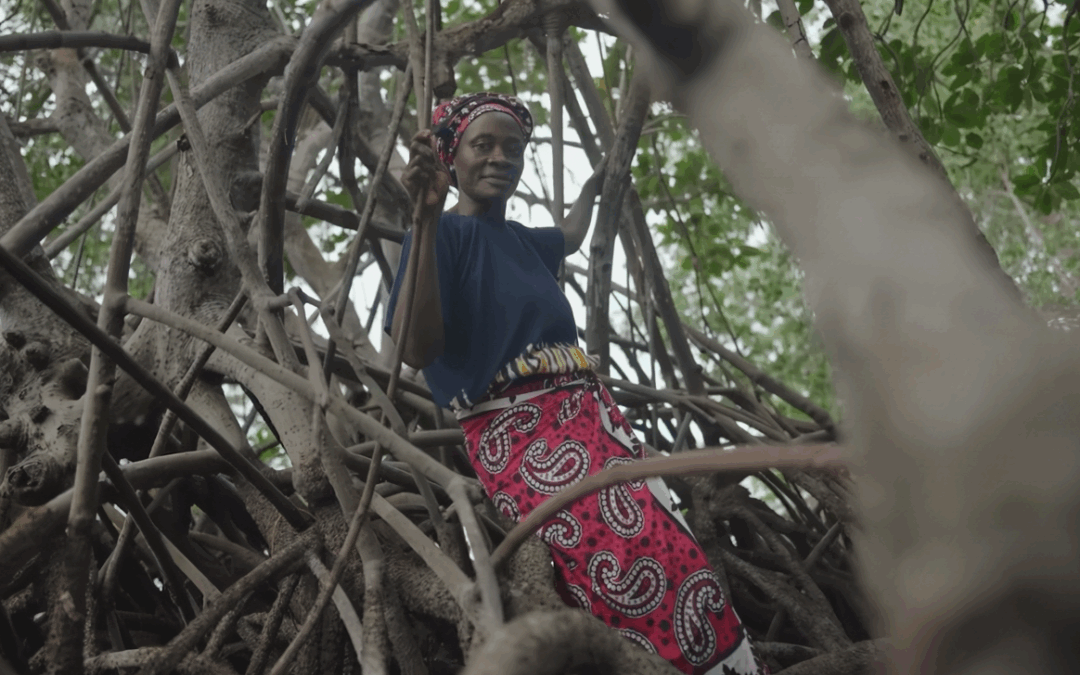
By Messy Sum
“Eunice is very creative. The song we are singing now, she came up with it during one of our restoration exercises. As a leader, she leads by action. She is always at the frontline of every activity Chambuko participates in,” shares Truphena, Secretary of the Chambuko Amkeni Conservation Group, during a side discussion as we filmed “Amkeni,” a film for the BBC StoryWorks Living Legacy series.
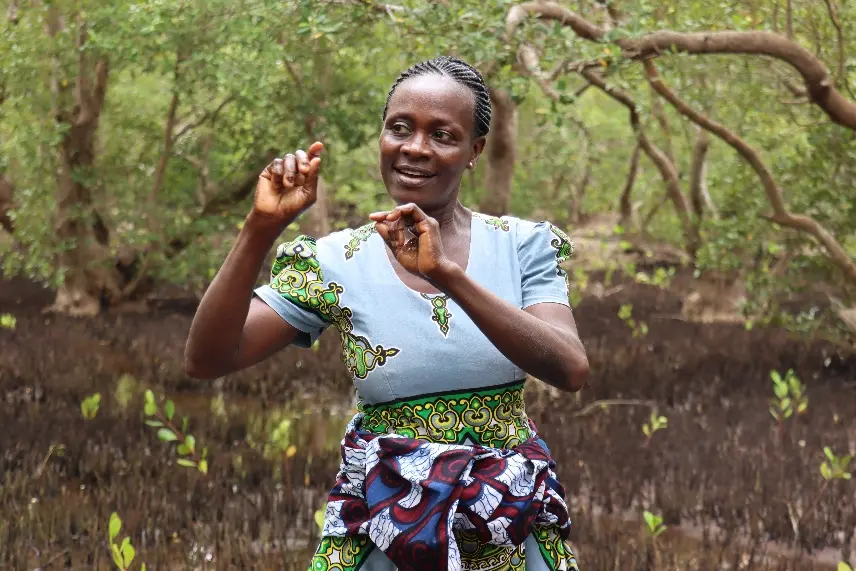
Eunice Chadzo Kirimo, Chair – Chambuko Amkeni Group. (Photo credit: ReSea Project)
Eunice sits calmly as I prepare to interview her about how the ReSea Project supports the group she leads. It is only my second time meeting her, but her collected presence is striking. She asks simply if I am ready to film, and as the camera rolls, I find myself in awe of her quiet, unshakeable authority. She speaks effortlessly about the group’s vision, the mangrove honey value chain, and how it has allowed her to put her children through school and support her family. When the camera stops, my curiosity only grows. I want to understand the woman behind the leader, to poke her mind and understand the practical feminism I am now convinced she embodies.
Later, we attend a learning session on mentorship led by the ReSea Project team. Eunice has a notebook where she jots down everything she learns. She is not quick to speak, instead listening keenly as other group members express themselves.
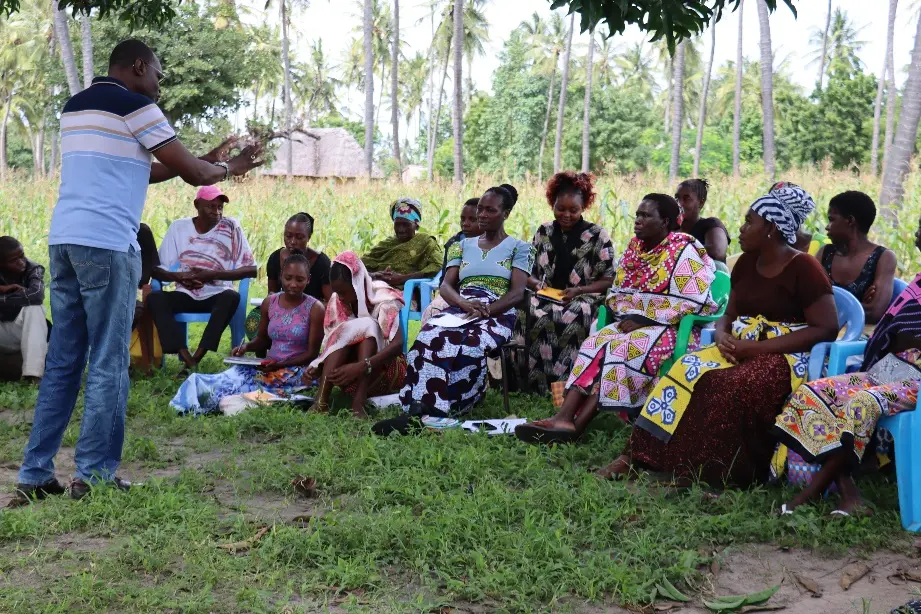
A Blue Economy Entrepreneurship session with the Chambuko Amkeni group. (Photo credit: ReSea Project)
Challenging stereotypes
The sun begins to set, painting the sky in evening hues. Eunice bids her group members goodbye, ensuring everyone has left before she finally departs. We are in the car together, dropping her home, and I gather the courage to ask a risky question. ‘I’ve heard the stereotype that Coastal women are lazy. Why is that?’
She laughs first, then looks at me, smiling but firm. “No, we are not lazy. We wake up very early in the morning to farm. Many times, it is women who hold these households together. They just do not speak. But, we farm, ensure our children are in school and are well fed, but still create time to attend group meetings that allow us to contribute meaningfully to the community. It is a tough job being a Coastal woman because culture expects us to be meek. But we are not.”
Her words hung in the air, a quiet testament to the silent labor that props up entire communities. I was intrigued, and I needed to hear more.
“Here, women will tell you, polygamy is the order of the day,” Eunice continues, her eyes gazing in deep introspection. “A younger woman or women will be brought when you least expect it. This puts a strain on the little resources the family has. It means women have to step up lest their children starve.”
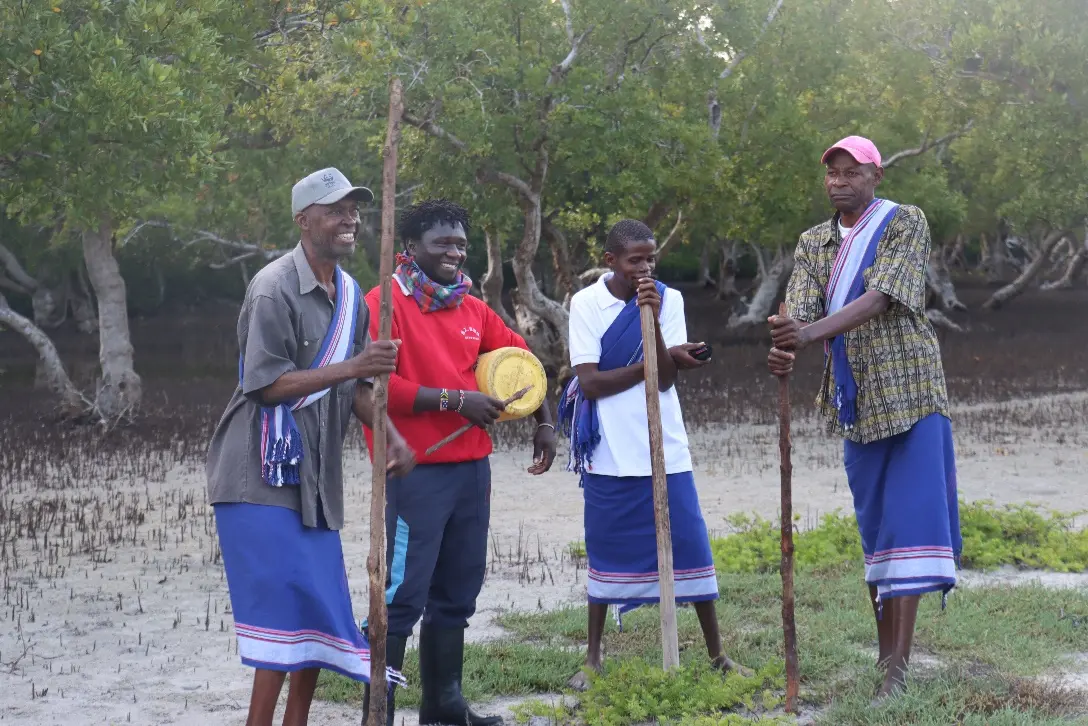
The male group members join in the song and dance (Photo credit: ReSea Project)
Eunice understands feminism in her own way. She lives and exemplifies it. She embodies it and tries to pull other women into self-sufficiency.
Dawn of a new day
Weeks later, we are on an official recce with the BBC at 5.30 in the morning. The sun in Kilifi rises picturesquely, and Eunice is already there, energetic, leading her group in a cultural dance. The men, women, and youth join in unison, lining up behind her. The men carry the sticks they will use to dig holes for restoration. Dawn carries optimism, bringing with it a new light. As the sun streaks through the leafy mangroves, Chambuko Amkeni’s story begins. Their dance and ululating carry the hope of a better tomorrow, built on mangrove honey.
“Previously, we would spend the whole day playing video games at a nearby video den. Many youths are still there. But I am inspired by the work Mama Eunice and the group continue teaching us,” says Mark, as he marches on with the group.
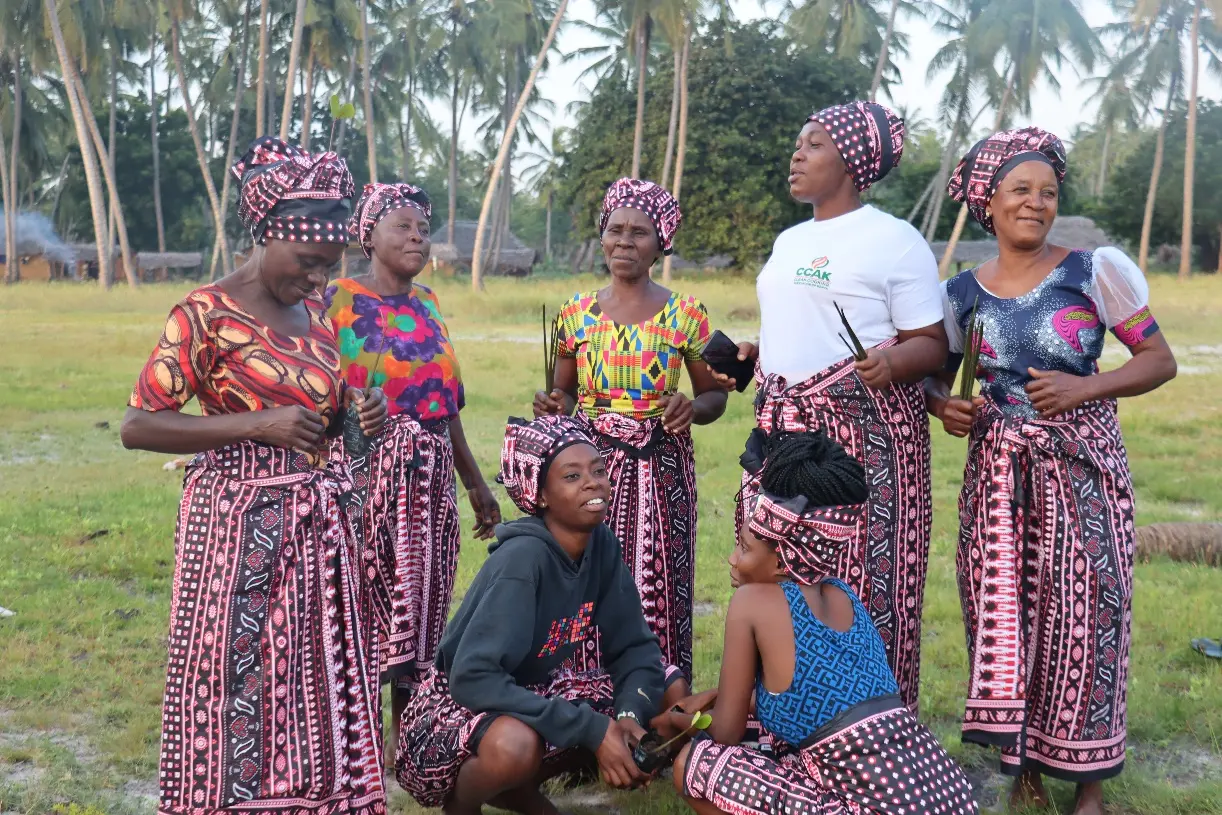
Some of the group members during the filming of the documentary. (Photo credit: ReSea Project)
During a break, I ask what they hope the film will achieve.
As they speak, I see it clearly: hope is not an abstract idea here. It is in the determined line of women following Eunice, their voices, different but united, weaving a chorus for a future they are building with their own hands. They say they hope the film tells their vision if everything goes well. And in that moment, watching Eunice lead, it feels like everything already is.
Watch Amkeni:
Learn more about the Living Legacy series:

About Chambuko Amkeni
Women and youth are disproportionately affected by the impacts climate change and environmental degradation. Even so, they have the knowledge and skills to develop solutions to these impacts and yet, they are not included in the formulation of solutions to adapt to these impacts.
The film highlights the story of one such group, Chambuko Amkeni from Matsangoni, Kilifi, Kenya, whose innovation moves beyond mangrove restoration to entrepreneurship—they also practice beekeeping and produce mangrove honey. The group is women-led with innovative solutions to combat and build resilience to the effects of climate change while advocating for recognition and space to participate in marine conservation, climate adaptation and a regenerative blue economy.
Follow us on social networks or subscribe to our newsletter for the latest Mission inclusion news.