
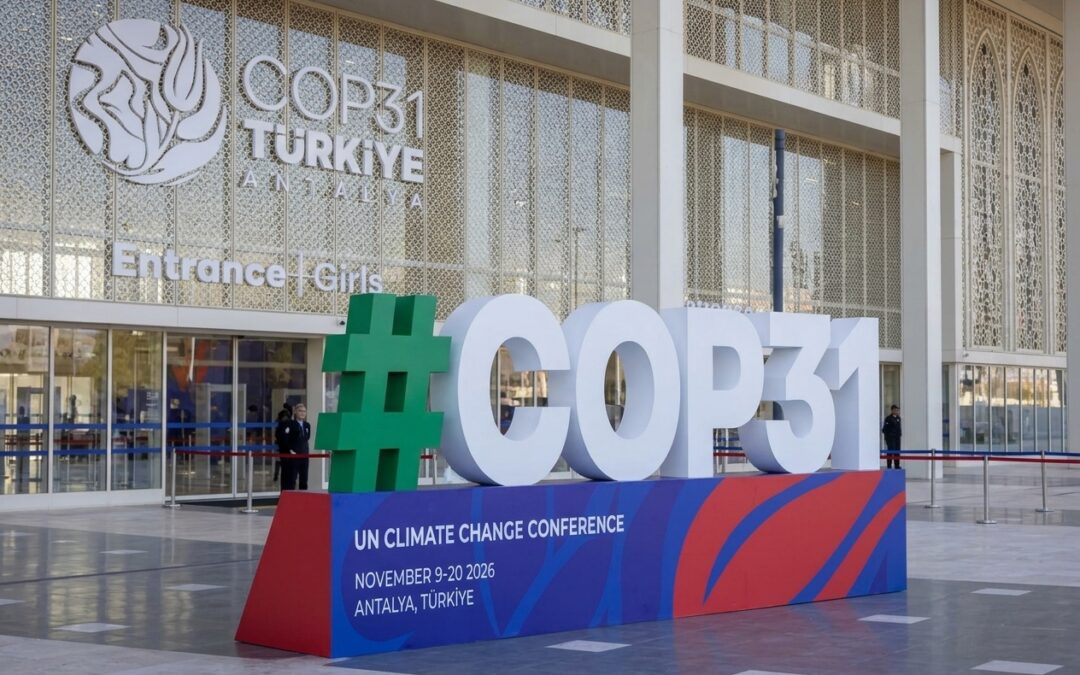
COP31 in Antalya, Turkey: What Is It All About?
From November 9 to 20, 2026, the eyes of the entire world are turned toward the Mediterranean coast. The city of Antalya, Turkey (officially designated as Türkiye by the UN), is hosting COP31, the largest international gathering dedicated to fighting climate change.
Behind this technical acronym lie decisions that directly affect our daily lives, our economy, and the future of the planet.
What Exactly Is COP31?
The term COP stands for “Conference of the Parties.” The “Parties” refer to the nearly 200 countries (as well as the European Union) that signed the UN international climate convention in the 1990s.
COP31 is therefore the 31st annual meeting of these countries. It is the only place in the world where almost every nation sits around the same table to negotiate common rules to tackle global warming.
During this climate summit, governments must take new measures to limit the climate crisis and achieve the goal of not exceeding 1.5 degrees of global warming.
To facilitate exchanges, the COP31 site is divided into two distinct spaces:
The Blue Zone
Who is it for?
Official country delegations, heads of state, UN-accredited observers, and journalists.
What happens there?
It is the diplomatic heart where official negotiations and the drafting of global agreements take place.
The Green Zone
Who is it for?
The general public, businesses, schools, researchers, and local associations.
What happens there?
Exhibitions, conferences open to everyone, and presentations of concrete ecological innovations.
Why Antalya, and Who Is Leading the Discussions?
The organization of this 31st edition is based on an unprecedented partnership between two countries:
Turkey hosts and presides over the event
The meetings are being held at the ANFAŞ Expo Center in Antalya, under the presidency of Turkish Minister Murat Kurum.
Australia leads the negotiations
Following a diplomatic compromise, Australian Minister Chris Bowen is serving as chief negotiator to guide discussions between countries.
More than 100,000 participants are expected over two weeks: heads of state, ministers, scientists, Indigenous Peoples’ representatives, businesses, youth activists, and community organizations. Mission inclusion is on site to follow the climate negotiations.
What Topics Are Discussed at a COP?
The main goal is to prevent global temperatures from rising too high, too quickly. To achieve this, discussions always revolve around four major, easy-to-understand themes:
Polluting Less and Changing Our Energy Sources
Phasing out polluting energy. Countries discuss how to gradually reduce the use of coal, oil, and gas, which are the main drivers of air pollution.
Developing clean energy. Governments commit to installing more solar panels, wind turbines, and other clean energy sources to replace polluting fuels.
Monitoring everyone’s efforts. Each country presents its action plan to reduce pollution. The conference serves to verify whether everyone is keeping their promises.
Finding the Money to Act and Repair Damage
Helping lower-income countries. Transitioning to clean energy is very expensive. Wealthy nations and major corporations negotiate to unlock hundreds of billions of dollars to help developing countries make this transition.
Paying for disasters. Some countries, such as small island nations, pollute very little yet bear the brunt of rising sea levels and massive storms. Leaders organize financial aid to repair damage already caused by climate change.
Adapting to Changes Already Underway
Protecting our cities and homes. Because the climate is already changing, we must learn to live with it. Discussions focus on how to make our cities and buildings more resilient to heat waves, wildfires, and floods.
Securing water and food. With droughts becoming more frequent, countries seek solutions to protect agriculture and ensure everyone has enough drinking water and food.
Protecting Nature and Populations
Saving forests and oceans. Trees and seas absorb a large portion of our pollution. Countries therefore look for ways to halt deforestation and protect the oceans.
Protecting citizens and health. The summit also addresses the impact of climate on our health (such as heat-related illnesses). It ensures that the ecological transition is fair for workers, Indigenous Peoples, and future generations.
What Are Mission inclusion’s Goals at COP31?
Mission inclusion is on the ground with five main demands to ensure that women, youth, and communities have a say in climate decisions and access to the funding needed to take action.
A Seat at the Decision-Making Table
Delegations
Mission inclusion calls for country delegations to be made up of at least 50% women and to meaningfully include youth, Indigenous Peoples, persons with disabilities, and the most affected communities.
Belém Plan
In implementing the Belém Gender Action Plan, adopted at COP30, integrating gender considerations at every stage—right down to budgets—must be mandatory.
Protection
Community and women human rights defenders must be protected, and gender-based violence must be combated.
Funding Without Creating Debt
Public Grants
Mission inclusion calls for public, predictable climate financing in the form of grants, with direct access for local organizations and women’s organizations.
Rules and Duration
Rules must be simple enough for small organizations to apply in their own language, and funding for feminist and community-led initiatives must be flexible and span multiple years.
300 Billion
Developing countries must receive at least US$300 billion per year by 2035, with wealthy countries leading the way.
Loss and Damage
The Fund for responding to Loss and Damage, which helps repair harm already caused by climate change, must receive new contributions in 2027, and accessible, timely support must reach affected communities.
Recognizing the Work of Communities
Conservation and Restoration
Mission inclusion calls for recognizing and funding what communities are already doing to protect and restore their marine environments and forests.
Women’s Work
Women contribute to these efforts while taking on a disproportionate share of unpaid care work. Mission inclusion calls for this work to be fairly compensated, on par with external expertise.
Linking Climate, Nature, and Human Rights
Two Conventions
Mission inclusion calls for aligning the commitments of the UN climate convention and the biodiversity convention—including oceans and coasts—and grounding them in gender equality, social inclusion, and human rights.
Women’s Work
Women contribute to these efforts while taking on a disproportionate share of unpaid care work. Mission inclusion calls for this work to be fairly compensated, on par with external expertise. (Note : Ce paragraphe apparaît en double dans l’article original).
Measuring Progress
Data
Mission inclusion calls for data disaggregated by gender, age, disability, location, and socioeconomic status across all climate programs.
Monitoring
Transparent and independent monitoring must be ensured, open to community organizations and local communities.
Follow us on social networks or subscribe to our newsletter for the latest Mission inclusion news.