
By Messy Sum
Why women’s inclusion is key to advancing Nature-based Solutions for climate adaptation
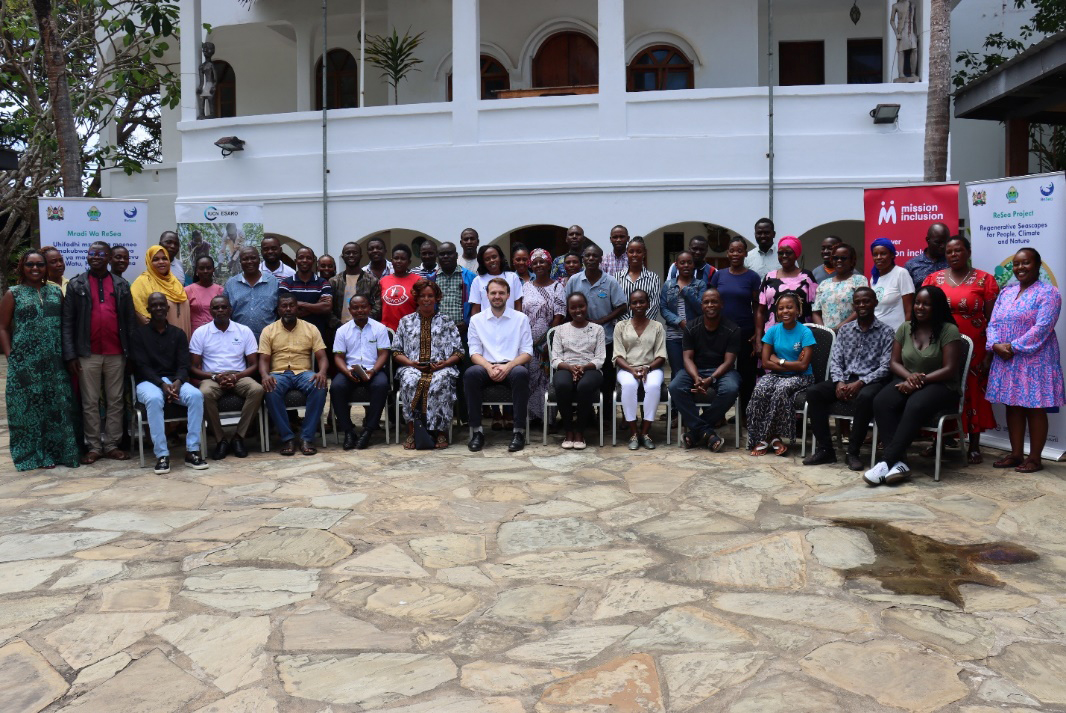
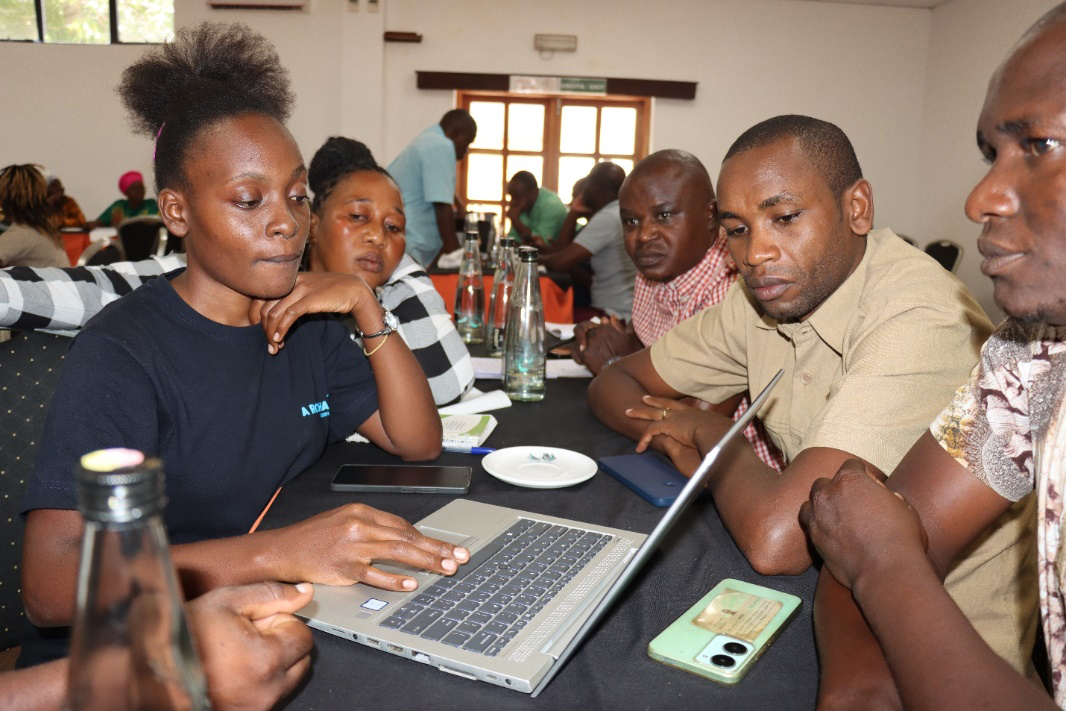
Participants during the NbS training in Kilifi
The ReSea Project in Kenya recently convened a five-day intensive training on gender-responsive Nature-based Solutions (NbS) for climate adaptation. Held in Watamu, Kilifi County, the sessions brought together representatives from Government agencies including the County Government of Kilifi, Kenya Wildlife Service (KWS), Kenya Forests Service (KFS), Kenya Marine Fisheries Institute (KEMFRI), conservation partners, community-based organizations, different community structures including leaders of Beach Management Units (BMUs) and Community Fisheries Associations (CFAs) and the community at large to learn, share, and strengthen their skills in implementing gender-responsive NbS.
From economic valuation of ecosystems to gender-responsive monitoring and evaluation, the training highlighted that successful NbS must not only restore ecosystems but also give power back to communities. The training highlighted the importance of inclusive participation of women in the success of Nature based solutions.
Women as custodians of nature and community wellbeing
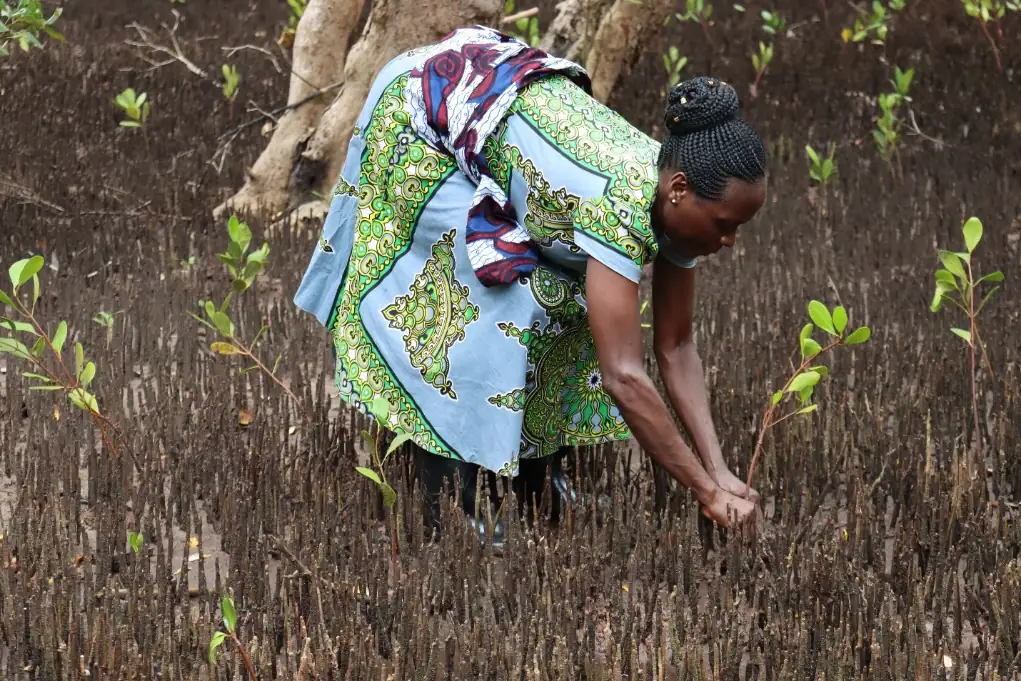
Eunice, Chairlady of Chambuko Amkeni Conservation Group planting mangroves (Photo credit: ReSea Project)
Across Kilifi’s Coastal communities, women play a central role in fishing, mangrove conservation, eco-tourism, and small-scale entrepreneurship. Groups such as Jimba Sauti la Wamama, Mkwajuni Young Mothers and Shella Pwani, all present at the training, demonstrated how women led businesses are championing conservation while sustaining livelihoods.
Women are often the first to experience the impact of climate change on food security, water availability, and family health. Their lived experiences provide unique insights into designing NbS that meet immediate community needs while safeguarding resources for future generations. Excluding women from decision-making silences these perspectives and weakens long-term sustainability.
Building inclusive NbS businesses
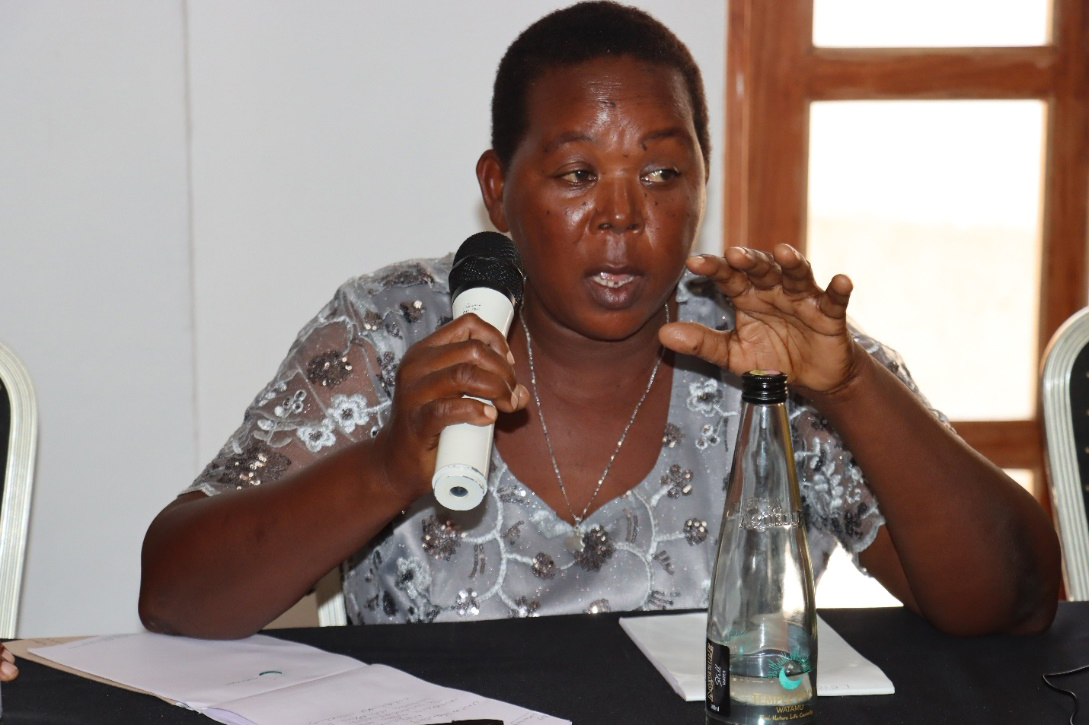
Chairlady of Gongoni Mikoko
A recurring theme throughout the training was the importance of structuring sustainable NbS businesses for income generation. Women entrepreneurs have already shown resilience and creativity in developing ventures that link conservation with economic benefits. By ensuring women are equally represented in training, mentorship, and financing opportunities, NbS initiatives can create more inclusive economic pathways.
Prawns Lake Conservation Project
For instance, during the field visit to Prawns Lake Conservation Project, participants learned how eco-tourism and mangrove restoration can coexist to generate income while protecting biodiversity. Such models thrive when both women and men are equally engaged in decision-making, record-keeping, and benefit-sharing.
Gender equality strengthens sustainability
Sessions on Gender Equality and Social Inclusion (GESI) underscored that gender-responsive approaches are not just a “nice-to-have” but a necessity. When women are actively involved in monitoring, evaluation, and learning processes, local ownership and accountability increase. As Mission inclusion’s Dorothy Seyyida emphasized, community-led monitoring that integrates local and scientific knowledge helps sustain NbS value chains in the long run.
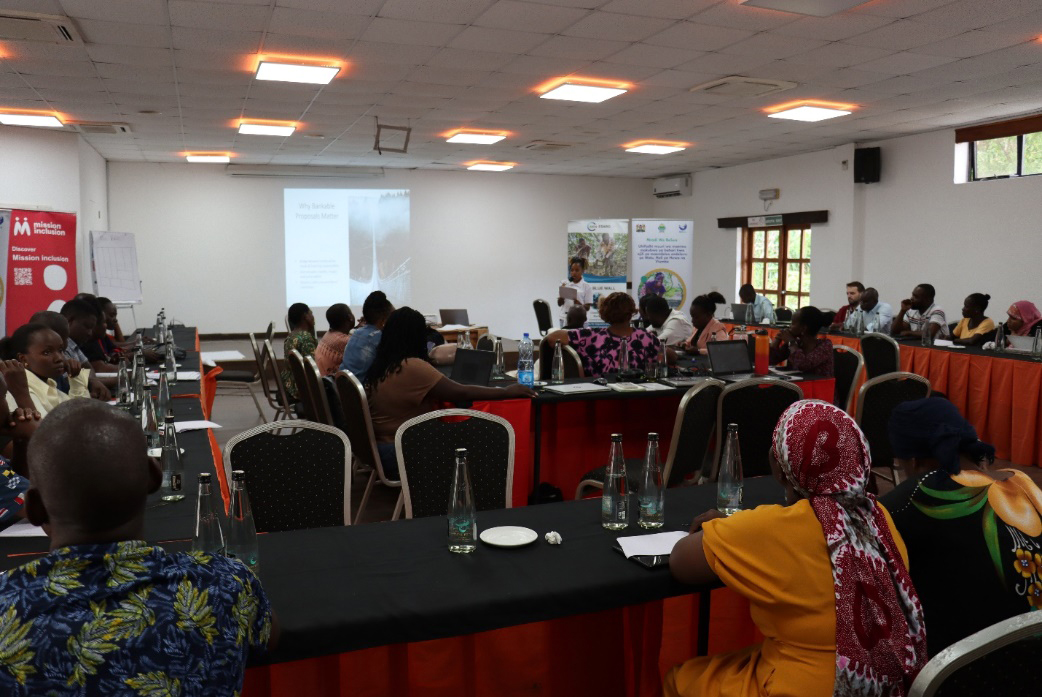
Training session participants
Moreover, when young mothers, fisherwomen, and women-led community-based organizations take part in designing and scaling NbS, the outcomes are more equitable. This strengthens resilience at both household and community levels.
Women driving policy and awareness
Beyond local projects, women’s participation also enhances advocacy and communication for wider adoption of NbS. From influencing county government policies to leading awareness campaigns, women are powerful voices for climate justice and environmental stewardship.
As one participant noted during reflections, practical knowledge-sharing platforms like this training empower communities, especially women, to engage confidently in policy dialogues and decision-making spaces.
A way forward
The successful conclusion of the NbS training in Kilifi has laid a strong foundation for scaling up climate adaptation strategies that are technically sound, community-owned, and gender-inclusive. By embracing women’s participation, we ensure that NbS are not only ecologically effective but also socially just and economically viable.
In the words of many participants, this is just the beginning. The challenge now is to translate training into action building NbS businesses, monitoring ecosystems sustainably, and ensuring women remain at the forefront of climate solutions.
Because when women lead in protecting nature, entire communities thrive.